

Key takeaways
- Online, shade selection is a guess. Customers can’t swatch, ask an advisor or check a mirror.
- Product descriptions can’t close the gap. Most shoppers know whether they’re fair or medium, but far fewer know their undertone, and shade names vary from brand to brand.
- A guided, counter-style conversation fixes this. Zellor’s Beauty Advisor starts with what the shopper already wears, then works out their depth, undertone, skin type and preferences.
- Explaining the “why” builds the confidence to buy one. Shoppers who see why a shade suits them, and which to avoid, are more likely to order a single shade rather than three and return two.
- One match grows into a full routine. The advisor recommends compatible products across the routine, with shoppable TikTok and Instagram videos inside the chat, plus a saved summary for easy reordering.
- Fewer returns is only part of the gain. Brands also see more completed purchases, bigger baskets and more repeat customers. They also learn which shades, skin tones and concerns come up most.
- The approach goes beyond makeup. The same logic cuts returns in self-tan, where undertone and application effort matter, and in haircare, where hair type and concerns decide what works.


Most of us have had at least one mishap when buying cosmetics online. From a foundation that was way too dark, a tan that turned green, or a haircare product that didn’t work for our hair type, the results were very far removed from what was expected or desired.
And this challenge is one of the key issues faced by beauty brands when selling online. In-store, a customer can swatch a product, ask the sales assistant at the counter for advice, and check in a mirror to see what it looks like on them. Online, it’s all an educated guess.
And it is this uncertainty that often results in the wrong product being selected, which ultimately means either a return, if possible, or a reluctance to buy again. Brands either lose a customer or must write off the stock as a loss, as opened cosmetics usually can’t be resold.
However, there is a solution that recent technology advances have made viable and scalable. Shade matching with personalized product recommendations gives customers the confidence and assurance that they have indeed selected the best match. No surprises later, no returns; just repeat purchases.
Why product descriptions, even the good ones, still lead to mismatches
No matter how well written your product page is, it will always fall short when compared to the in-person experience.
Why?
First, there’s nothing to try on. A customer has to rely on the color they see on a screen to determine its suitability. A color can look different because it depends on the brand’s photos, the person’s phone, and how bright their screen is. It rarely looks the same as it will on skin.
Then there’s the tone underneath our skin color. Most people can tell you if they’re fair or medium, but far fewer know if their skin leans warm, cool, or somewhere in between. Get that wrong, and a foundation can look grey, pink, or orange, even if it’s the right lightness.
Shopping with a new brand makes it harder again. Every brand will name and number its shades differently, so knowing your shade in one tells you nothing when trying a different brand.
It’s not only about color, either. The right shade can still end up back in the mail if it feels wrong, like a matte foundation on dry skin, or a mousse tan for someone who can’t stand that heavy, sticky feeling.
And finally, lighting plays tricks. Skin looks different in the bathroom, by the window, and on a phone camera, so it is very easy to get it wrong.
How Zellor’s shade matching works
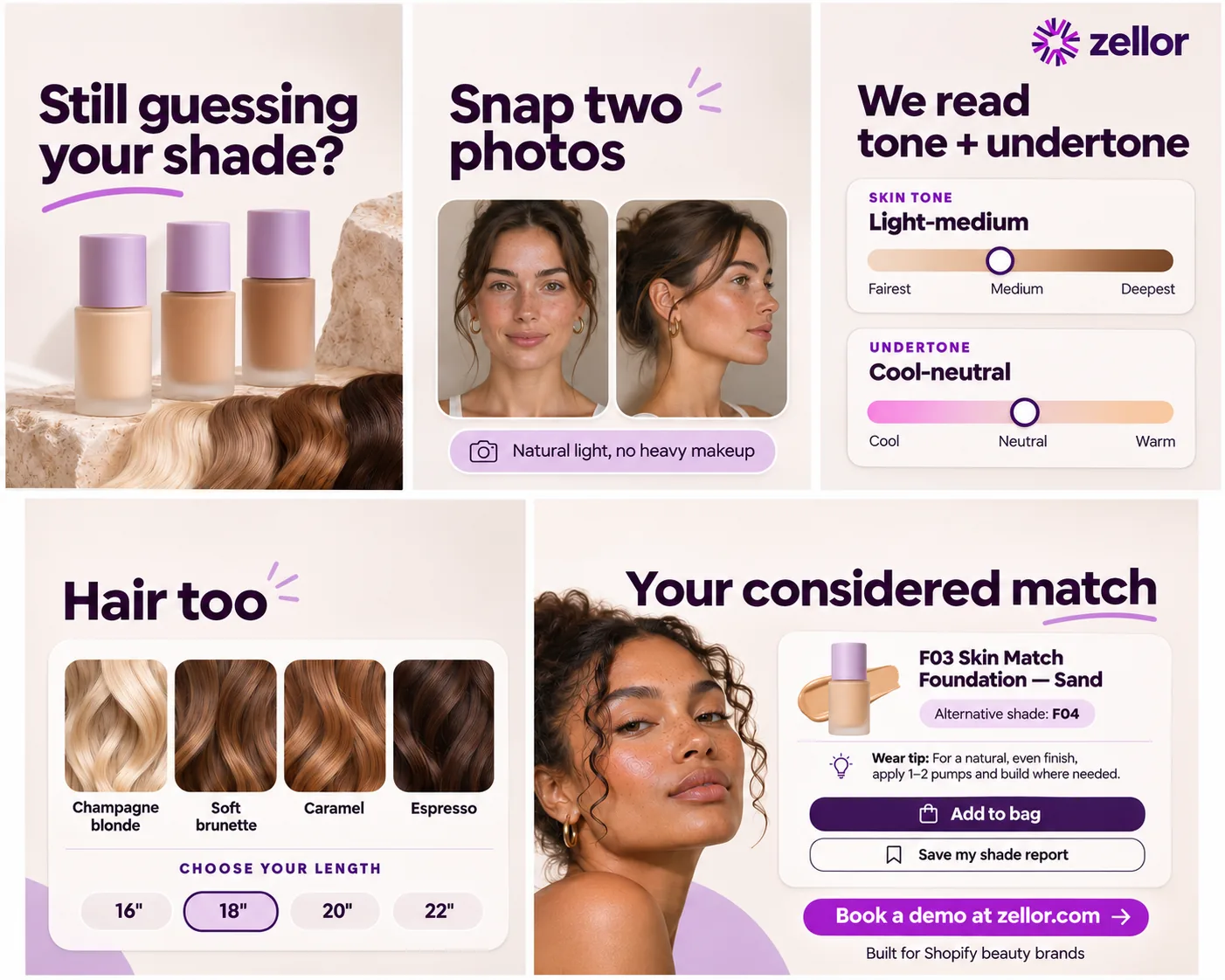
However, despite these issues, it is still possible to find your perfect shade online. The key to this is that the experience should mirror the in-store experience and feel like you are chatting with someone at a beauty counter. The Zellor Beauty Advisor does that. It sits right on your brand’s website and interacts with the shopper through a series of questions and videos.
It goes like this:
It starts with what the shopper already knows
Rather than asking for a shade from a brand they’ve never bought, it asks what they wear now from any brand and works out the match from there.
Next, it figures out their coloring
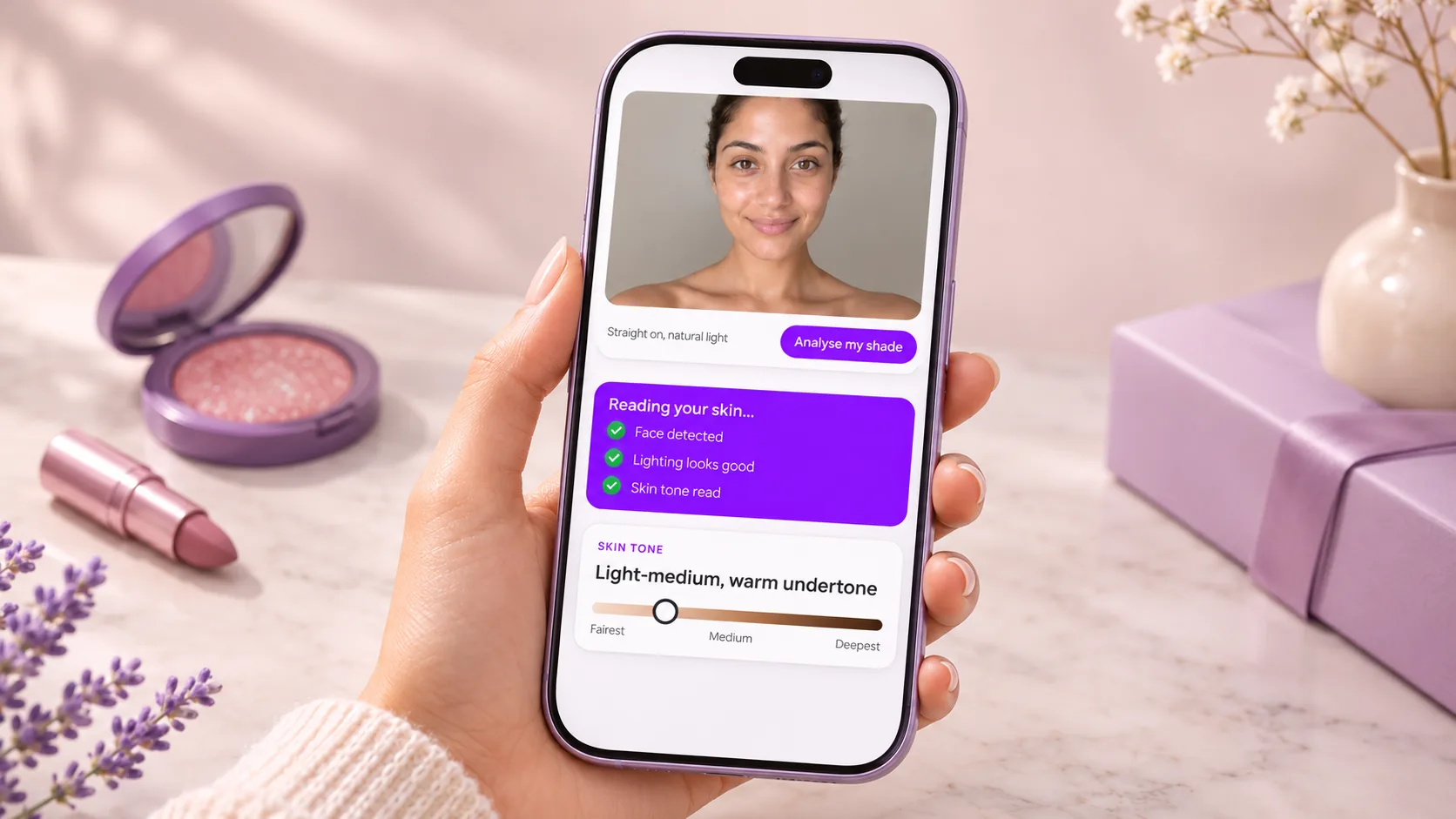
Shoppers slide along a row of real faces to find how light or deep their skin is, then answer a few easy questions to find the tone underneath. Does your skin burn or tan in the sun? Does gold or silver jewelry suit you better? Do the veins on your wrist look blue or green?
Then it asks about their skin and what they like
Is it dry, oily, a mix, or sensitive? Do they want a glowy or matte look, light or full coverage, a gel or a mousse?
If they’re happy to, shoppers can add a couple of photos, one straight on and one from each side. This helps even out tricky lighting and lets the advisor spot things like shine, dryness, or redness.
The customer always has the final say. They see what the advisor picked up and can change anything that doesn’t sound right, which makes the match even more accurate.
Finally, they get their shade along with the reasons it suits them. It also tells them which shades to avoid and why. This makes a bigger difference than you think. When shoppers understand why a shade is right for them, they trust it enough to buy just one, instead of ordering three and sending two back.
From one match to a fully personalized routine
Finding the right shade is just the start. Once the Zellor Beauty Advisor understands someone’s skin, it can help them pick out everything else they need for their ideal routine.
It makes sure the product itself suits their skin, not just the color. A shopper with dry skin, for example, gets pointed to a formula that won’t cling to dry patches.
It suggests products that work well together, like a primer, concealer and powder all chosen for the same skin, or a tan, mitt and tan remover that make up a full kit.
It can go beyond foundation, too, suggesting blush, lipstick and eyeshadow colors that flatter their natural undertone. It will also show colorways that won’t complement their undertones, and reasons to avoid them.
And what makes the experience even more engaging and formative is that the conversations are all video-led. Content from the brand’s TikTok and Instagram feed plays right in the chat, so shoppers can see the product on real people before they buy it. They don’t need to go to TikTok or Instagram to watch these videos; it’s all there for them within one conversation.
And it gives them a handy summary of their shade and routine to keep, so next time they can simply reorder without guessing all over again.
This personal touch is what takes a shopper from “I’m not sure if this shade is right for me” to “this is the one for me”.
Why shade matching means fewer returns
The wrong shade, a finish they didn’t expect, or a product that “looked different online” are the most common reasons customers send purchases back. An insightful chat before checkout catches all of them.
And everyone benefits.
- Brands lose less stock. Once foundation, concealer, or tan has been opened, it usually can’t be sold again, so every return that doesn’t happen is money saved.
- More people actually buy. Plenty of shoppers who aren’t sure of their shade don’t return anything; they just leave without buying.
- Baskets get bigger, because a routine built around their skin naturally includes the products that go with their shade.
- Customers come back. Once someone has found their perfect shade with you, they’ll return to you to buy it again.
- And brands learn from every conversation. They can see which shades, skin tones, and worries come up most, and where shoppers get stuck. That helps them improve their product pages, their content, and even the shades they make next.
Finding the perfect match isn’t just about makeup
Shade matching works for any product where the right choice depends on the person buying it.
For example, take self-tanning products. Most tan returns happen because the result looked green, orange, or patchy; the shopper didn’t like how it felt, or it was simply too much effort to keep up.
Brands can avoid this by deploying an advisor to match tans to natural skin, explain why a tan didn’t work before (often it’s the color underneath, not how dark it is), and suggest a gel, mousse, or drops based on what the customer actually enjoys using.
The advisor should even be upfront about the effort involved, how long it takes to dry, how often to top it up, and which option suits someone with five minutes to spare rather than fifty.
Ditto haircare. Whether a product works depends on someone’s hair type, how curly or straight it is, its color, or a certain hair concern. A quick chat about these things means shoppers get products picked for their hair, not just whatever is most popular. Plus, sensitive topics like hair loss are handled gently, with reassurance and a suggestion to see a professional.
Help your customers get it right the first time
Give shoppers the same advice they’d get at a beauty counter, right on your website and in your brand’s own voice, and they’ll buy the right product with confidence.
Zellor’s Beauty Advisor brings shade matching, personalized routines, and shoppable videos together in one place for beauty and wellness brands. It works with tools you may already use, like Klaviyo and Gorgias, and it’s built by a team that’s worked in the beauty industry for 20+ years.