


Key takeaways
- Online beauty shoppers take a leap of faith. They can’t swatch, smell or feel a product, and the gap between what they need and what a product page tells them is where sales are lost.
- A shopping assistant is not a chatbot. It replicates the in-store experience by asking a few simple questions and recommending the right products from your catalogue.
- Video turns answers into sales. The Zellor Shopping Assistant puts videos in a shoppable carousel with tap-to-buy tags, so customers can buy without leaving the page.
- Trust is the product. An assistant scales that feeling of being understood across every visit, turning uncertain browsers into confident buyers.


When buying beauty products online, you can find yourself taking a leap of faith more often than you’d like. You can’t swatch a foundation on your wrist, smell a fragrance, or feel how a moisturizer sits on your skin. You’re left to decode ingredient lists, compare dozens of near-identical shades, and hope the product works for you.
From the seller’s perspective, this gap between what a customer needs and what your product page can tell them is where a lot of sales are lost.
The bad news is that bridging this gap can be challenging.
The good news is that a shopping assistant closes it.
How a shopping assistant helps close the gap
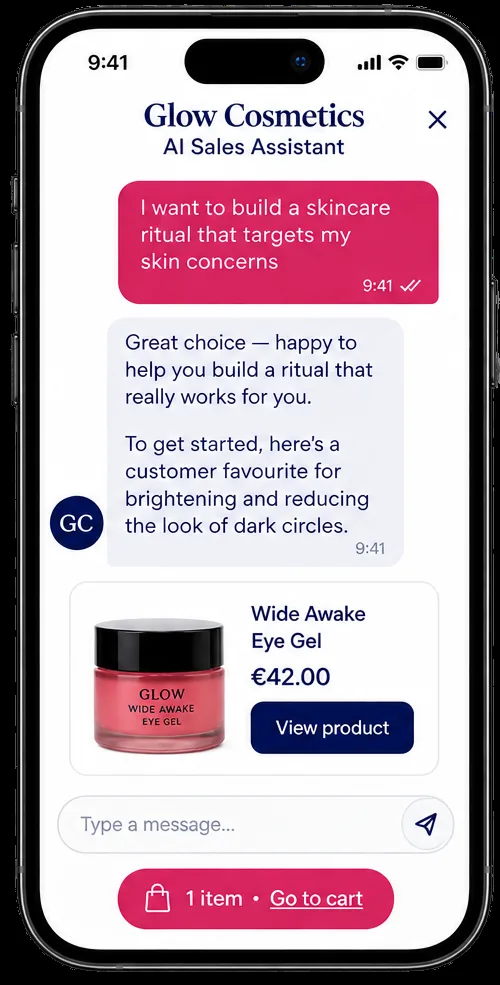
One thing I want to establish upfront. A shopping assistant goes beyond a traditional chatbot.
It’s a far more sophisticated technology that is built to replicate the in-store experience. A shopping assistant asks a few simple questions, understands what the shopper is trying to achieve, and recommends the relevant products from a brand’s catalogue. It can explain what an ingredient does, suggest how to build a routine, and answer the practical questions that otherwise stall a purchase: Is this suitable for sensitive skin? Which shade is closest to the one I use now? What goes with this?
The Zellor Shopping Assistant
When we first identified the challenge beauty brands had with the online buying journey, we knew that given the nature of beauty purchases, video was going to have a lead role in our solution.
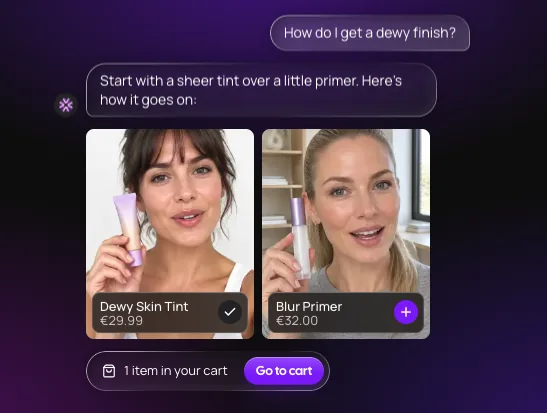
The Zellor Shopping Assistant uses video to drive conversion; each video appears in a shoppable carousel with tap-to-buy tags. Customers no longer swap between tabs; instead, they can purchase them on the page.
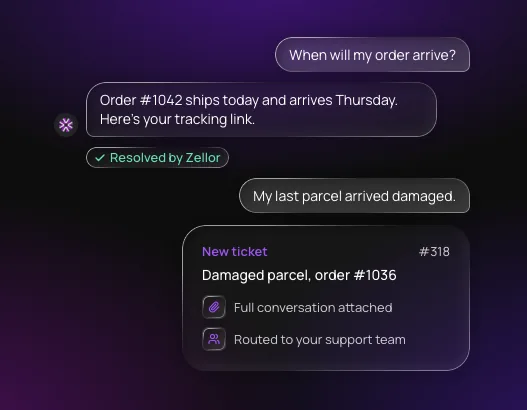
We can also answer customer support questions as Zellor integrates directly into your ticketing system, resolving routine enquiries automatically and routing only complex cases to your team. Whatever Zellor can’t resolve arrives with your team in full context.
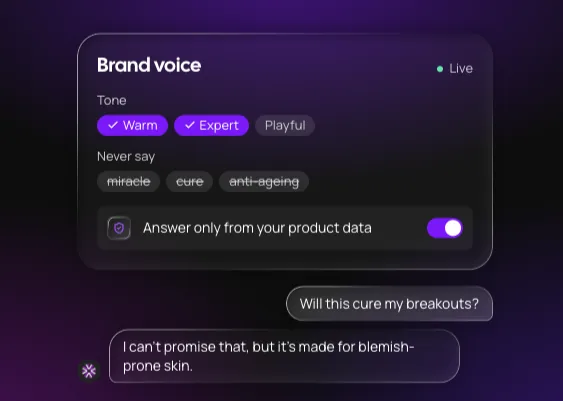
Our assistant is also built around your brand. Brands can configure the assistant’s tone, product knowledge and response guardrails to keep the experience aligned with their brand; your brand and product education team edits the voice prompt directly and defines the guardrails on ingredients and cosmetic claims. The Zellor Shopping Assistant grounds its product recommendations in your approved product data and brand content.
We also understand that brands must protect customer data. We take data protection seriously and design our services to support merchants in meeting applicable privacy requirements.
See for yourself: start a free trial.
What to look for in a shopping assistant
Personalization only works when it’s done responsibly, and beauty raises a few specific risks that any brand should take seriously.
Bias
Models trained on data skewed toward lighter skin tones or a narrow age range perform worse for everyone else. Ask vendors how their systems are trained and tested across skin tones, ages, and skin types.
Privacy
High-resolution facial images may raise additional data protection considerations, particularly where they are processed for biometric identification. Look for clear consent, GDPR-aligned practices, and a straightforward explanation of what is collected.
Representative data
Recommendations are only as good as the data behind them. If your catalogue information and customer data don’t reflect your whole audience, the advice won’t either.
Authenticity
As content creation gets faster, be clear about when imagery is edited or AI-generated, so shoppers are never misled about what a product actually does.
The takeaway
In beauty, trust is the product. Customers buy from brands that make them feel understood and confident in their choice. A shopping assistant scales that feeling across every visit, turning uncertain browsers into confident buyers while giving you a clearer picture of what your customers want. If your store still relies on filters and product descriptions alone, you’re asking shoppers to do work that your competitors are starting to do for them.